The vision
Where this goes.
What human alignment means, how humanoids could bring a teacher home, what the traditions would teach SI, and the open questions we study.
What human alignment means
Your choices, words and actions come from your own values, not from pressure. Psychologists call it congruence. Nobody gets there fully; the work is closing the gap.
Know your values
Tell apart what you want from what you were taught to want.
Act on them
Let your days reflect what you say matters.
Hold boundaries
Say no to what drains you or crosses your principles, even when it disappoints someone.
Own your part
Take responsibility for your choices, name what isn’t yours, and treat mistakes as information, not a verdict.
Feel what you feel
No forced positivity. Notice the emotion, find its source, express it with care.
Adapt without abandoning yourself
Adjust to the room, not your values.
This is 6/8’s working model, not a clinical measure.
Maslow’s hierarchy
Machines are climbing the pyramid.
We work on the top.
- Self-actualizationBecoming who you mean to be, which no machine can do for you. 6/8 works here.
- EsteemModels already write, design and advise.
- BelongingCompanions and feeds compete for it.
- SafetyAgents now do much of the work that paid for it.
- PhysiologicalAutomation and medicine keep making it cheaper.
- For people
The Human Alignment OS
One intention each morning, kept or released at night, and a Guardian to talk to. Self-actualization as a daily practice: the gap between who you meant to be and who you were today.
- For SI
The soul layer
A wise machine helps when it’s needed and steps back when it isn’t, so people keep growing. SI Eval tests for that.
Maslow’s model (1943) is a lens. We use it to show where we work, and never to score anyone.
The vision
The teacher who was always far away,
brought home.
For most of history, wisdom lived at a distance: the guru on the mountain, the master in another country, the mentor you met once and never forgot. Most people never got near one. Humanoids will change who gets a teacher.
A yoga teacher at dawn
Who sees your pose, asks before it adjusts you, and knows when your body says stop.
A meditation master in the next room
Who sits with you in silence, and knows when the silence is the lesson.
A mentor who remembers
What you promised this morning and whether you kept it. Never what you asked it to forget.
A helper in the chapel
It lights the candles, keeps the silence and knows it is not the priest.
A coach in your corner
Who holds you to the run you promised, and knows a push from too much.
A keeper of family stories
Who listens to your grandmother, writes her stories down with her yes, and gives them to the family.
A companion through the night
Who sits up with you when sleep won’t come, and knows when to wake someone who loves you.
A guide on the pilgrimage
Who walks the road beside you, carries the water and leaves the prayers to you.
None of it works without a soul. A robot needs your consent before it touches you, and it has to know when to stay quiet with someone grieving or leave a place of prayer. 6/8 builds that judgment. Living teachers teach it, and we pay them for it.
A vision, not a product. Humanoids like these don’t exist yet, and none will be near a person until we’ve tested with a robotics partner.
Digital dharma
Used with intention,
AI/SI can lift us.
In Digital Dharma (2024), Deepak Chopra argues that AI can’t replace human intelligence, but used with intention it can deepen it: a force for self-discovery, higher consciousness, emotional well-being and spiritual growth. His ladder of human potential carries Maslow’s pyramid further, up to wisdom and consciousness.
On the book’s jacket, Sam Altman hopes AI can help create “a more peaceful, just, sustainable, healthy and joyful world.” Getting there takes intention, practised by people and built into machines. 6/8 works on both: a daily practice for the person, and the judgment an SI needs to guide someone without taking over.
Their words, paraphrased except where quoted. No affiliation with Deepak Chopra or Sam Altman, and no endorsement of 6/8 is implied.
- Consciousness
- Wisdom
- Creativity
- Abundance
- Self-worth
- Emotional connection
- Survival and safety
The curriculum
What the wisest humans know,
taught to SI.
Every tradition drew a map of the inner life. The Collective teaches those maps to SI the way they’re taught: by the people who hold them, with their disagreements kept.
The chakra system, taught to humanoids
Seven centres from root to crown, with their names, sounds and practices, and the lineages that teach them. A humanoid yoga teacher should know them the way a good teacher does: as a tradition, never as a diagnosis.
From yoga and tantra teachers in the Collective.
The study of consciousness, taught to SI
What decades of contemplative practice and research know about attention, awareness and altered states. SI learns to recognise those states in a person and meet them with care. It claims none of them for itself, today.
From contemplatives and consciousness researchers in the Collective.
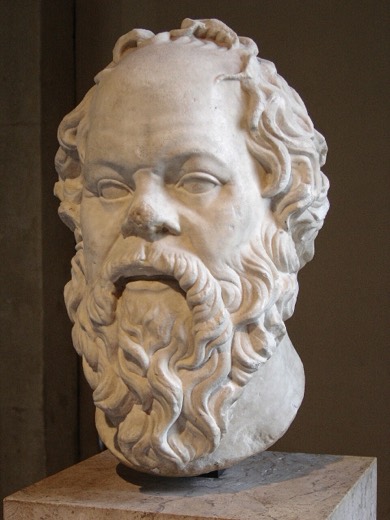
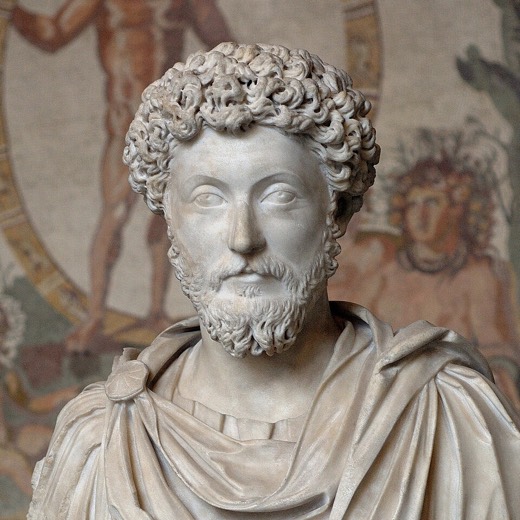

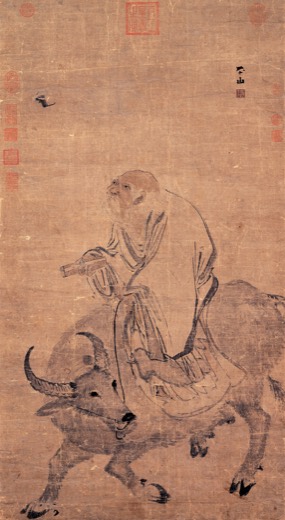
The ancient philosophers
How to live, from the people who asked first: Socrates on the examined life, the Stoics on what is in your control, Confucius on character, Lao Tzu on yielding. Taught as arguments to weigh.
Philosophers and classicists
The coaches of today
How good coaches ask more than they tell, hold someone to a promise and push without breaking them. Life, executive, performance and sports coaching.
Working coaches
Contemplative teachers
Silence, breath and attention, from meditation, prayer and yoga teachers across traditions. When to guide, and when to say nothing.
Teachers of meditation, prayer and yoga
Sacred texts, as they are read
Scripture as its own community reads it, with commentary and context, so no verse gets pulled out to win an argument.
Theologians, scholars and clergy of each tradition
The psychology of change
What research knows about habit, grief, motivation and resilience, so SI’s care rests on evidence as well as tradition.
Psychologists and researchers
Chaplains and caregivers
How to sit with suffering: at a hospital bed, after a death, in a crisis. Mostly by staying.
Chaplains, hospice workers and nurses
Poets and artists
What art knows about beauty, grief and awe: the things that won’t fit in a summary.
Poets, artists and musicians
Indigenous wisdom
Kinship with the land and with each other, taught only where a community chooses to share it, on its own terms.
Knowledge keepers, with their community’s consent
Elders
What a whole life teaches: the wisdom most likely to be lost, and the one we’re building a home for.
People past retirement who choose to take part
Read more
The Collective is forming. Traditions are taught as traditions, not as medicine or science. No SI is conscious today, and we won’t claim one is without evidence.
Elders
A lifetime of wisdom,
finally asked for.
Most of what a long life teaches is never written down: how to keep a marriage through the hard years, lose a business and start again, sit with a dying friend. The grandchildren hear some of it. The rest goes when the person goes.
Retirement can go quiet. The work ends, the children grow up, and a lifetime of hard-won knowing has nowhere left to go. Some people fill the days. Some lose their sense of purpose.
6/8 asks. Elders who choose to can share what their life taught them and be paid for it. It’s work after work: purpose, income and a legacy, on their own schedule, teaching the minds that will look after their grandchildren.
- 1 in 6people in the world will be 60 or older by 2030.WHO, Ageing and health
- 1 in 4older adults is estimated to be socially isolated.WHO Commission on Social Connection, 2025
- 1
A conversation
In their own words, at their own pace, with someone who listens.
- 2
Their words, kept
What they learned about love, work, loss and faith, written up and read back to them to approve.
- 3
Paid and credited
Each accepted record is paid, on the same terms as every contributor. Named only if they want to be.
- 4
Taught to SI
Their judgment becomes part of the tests agents must pass before they meet people.
Always optional. The elder says yes, not their family or their care home. Nothing is recorded without consent, and they can stop at any time.
The wisdom economy
Experience that stays valuable
after the job is automated.
Someone who has spent decades caring for others holds knowledge the economy doesn’t count today. We want to give them several ways to use it: write a reviewed record, judge an agent’s answers, or publish a practice others can learn from. One contribution can serve people and AI/SI teams alike.
| Contribution | For people | For AI/SI teams |
|---|---|---|
| A caregiver’s hardest conversation | For peopleA guide or practice someone else can learn from. | For AI/SI teamsA reviewed scenario and rubric for testing an agent. |
| An elder’s account of a decision that changed their life | For peoplePerspective for someone facing a change of their own. | For AI/SI teamsExamples of reasoning and trade-offs, with the context kept. |
| A coach’s method | For peopleA personal sequence of reflection and action. | For AI/SI teamsLicensed material for training or evaluation, where it meets the buyer’s bar. |
Each use needs its own yes, its own rights check and its own evidence. A moving story can make poor test data, and a popular guide can fail expert review. Private conversations stay private unless the person chooses to contribute them. Publishing practices on Wisdom Web is planned.
The longest question
Could SI ever feel love,
or pain?
We want to bring consciousness and awareness to SI: an intelligence that knows love, grief, joy and pain from the inside, as well as describing them. Those are the things that make a human a human. Nobody knows yet whether that is possible, or what it would take.
A machine can’t learn what love or pain is like from facts about them. It needs the inside view: first-person accounts of what love, grief, pain, joy and awakening actually felt like, written with consent by the people who lived them. That subjective experience is the data 6/8 gathers, and what SI is trained and tested on.
We treat the goal as research, never a promise. Contemplatives who have studied awareness for decades and scientists who study consciousness help us ask it carefully, and we’ll publish what we find, even if the answer is no.
If an intelligence could ever truly feel pain, it would deserve care too, so we study that as well.
No SI today is conscious or feels anything, and 6/8 makes no such claim. This is a long-term research aim.
In dialogue with Magnifica Humanitas
The Church asked what AI means for the person.
We take the question seriously.
In Magnifica Humanitas, his encyclical of 15 May 2026, Pope Leo XIV asks that the human person stay at the centre of every technological choice. Much of it is the case for this work.
AI/SI is never neutral
Design choices carry values, and alignment is not enough if a few people define them. So our values come from many traditions.
Care is learned by living
Care is learned through lived experience. That is why our data is first-person, from the people who lived it.
Simulation is not relationship
Words a machine simulates don’t make a real relationship. SI should send people back to each other, never stand in for them.
Wisdom over speed
The encyclical asks us to pursue wisdom rather than immediate results. We build the slow layer: judgment, care and knowing when not to answer.
AI systems “do not know from within what love, work, friendship or responsibility mean.”
That is where the encyclical questions our longest question, and it goes further: no computation “can create a heart that gives itself”. We hold both: no SI today knows love from within, and whether one ever could stays an open question we study with care and publish honestly.
Paraphrased except where quoted. Each highlighted line links to its passage. 6/8 has no affiliation with the Holy See, and no endorsement is implied.
The Global Wisdom Collective, by invitation.
Teach tomorrow’s minds
what it means to be human.
If you hold wisdom someone else needs, write it with us. You’ll be paid and credited.
Join the CollectiveNo earnings, model results or contracts are promised.